Indian cuisine is famous for its biryanis and butter chickens, but the desert tells a different story. A Rajasthan culinary journey reveals a world of resourceful, nourishing food shaped by an ancient landscape.
While deeply connected to the ‘desi’ (local) heart of Indian cooking, the cuisine of Rajasthan is a unique chapter. It follows an intuitive Ayurvedic principle—using hardy, healthful ingredients and balanced spices to nourish the body for the desert climate. Embarking on this culinary journey in Jaisalmer reveals how meals draw on fresh local produce, ancient preservation methods, and vibrant cultural rituals. From courtyard dinners at sunset to folk performances, it shows how food, landscape, and tradition come together in the heart of the desert.
Culinary Heritage: Techniques Shaped by Desert Life
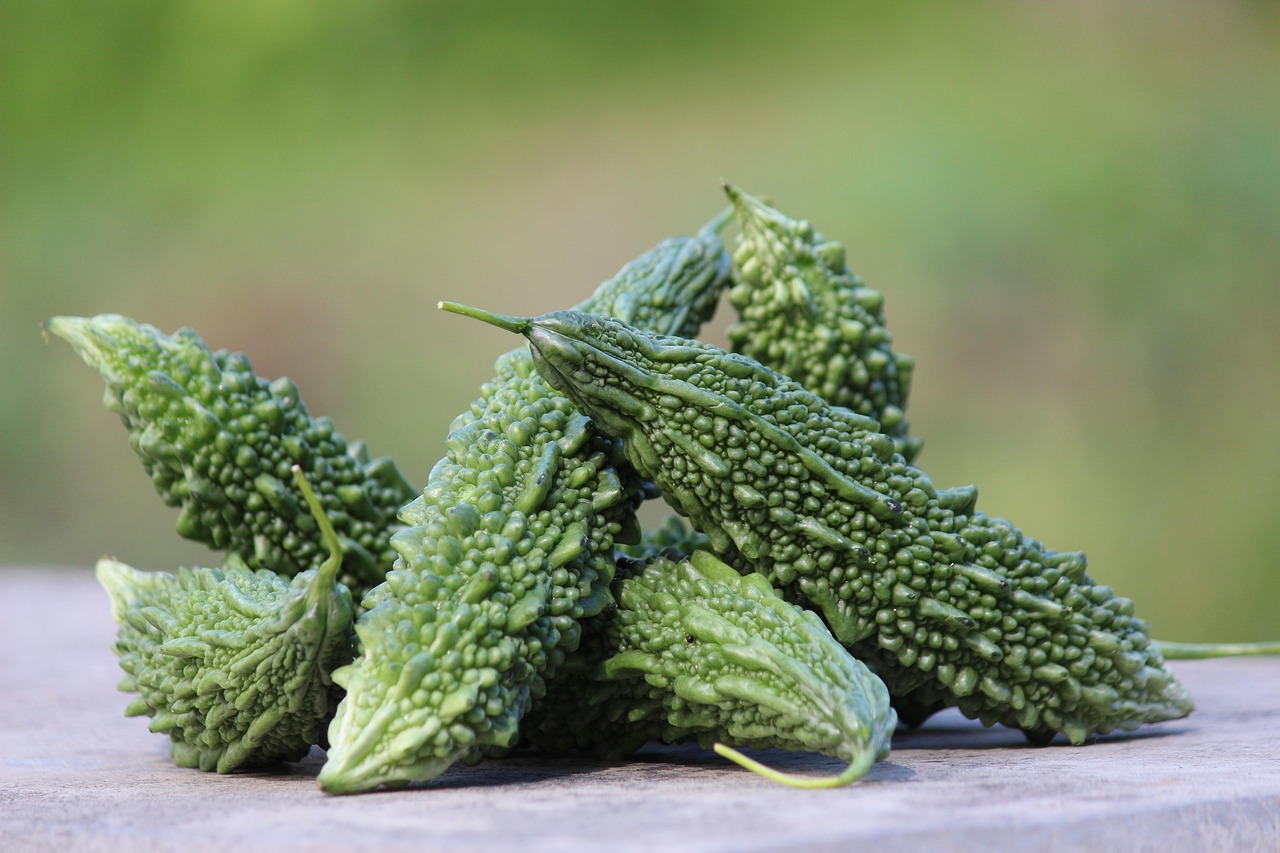
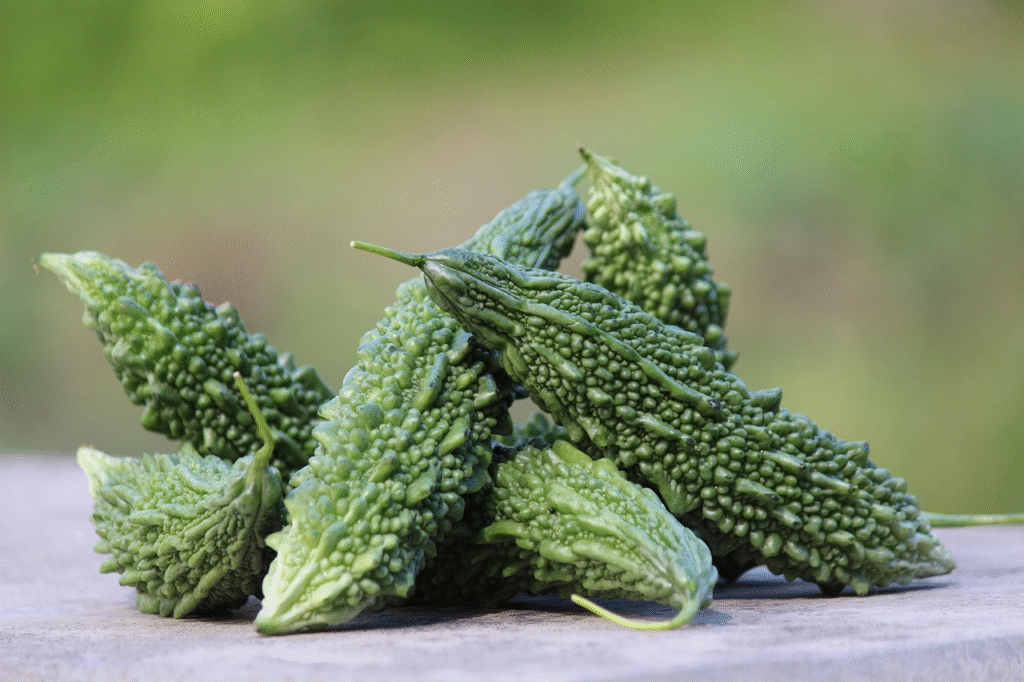
Rajasthan’s culinary heritage reflects life in the desert—where ingredients are precious, and cooking methods have been perfected over centuries. Traditional techniques like slow roasting, sun-drying, and clay-pot cooking preserve flavour and nutrition even in harsh conditions. Local farmers cultivate vegetables such as red carrots, gourds, and millets that thrive in the arid climate, while spices like cumin, coriander, and turmeric add warmth and depth to each dish.
Vegetarian food is common and celebrated here. Many dishes are naturally plant-based, and regional traditions include lentils, grains, and dairy as core ingredients. Even non-vegetarian meals respect local customs, often featuring chicken, lamb, or goat cooked slowly with aromatic spices.
Dining in Rajasthan is more than a meal—it’s a story. Every dish connects to the land, the climate, and the rhythms of desert life. At courtyards, home kitchens, or desert camps, these age-old techniques bring colour, aroma, and history to the table.
Local Farm Traditions: Red Carrots, Millet, and Desert-Grown Produce
You might wonder, what can possibly grow in a desert? The answer is a surprising bounty of resilient and flavorful foods. Rajasthan’s farmers are masters of working with the land, not against it.
They grow hardy crops that thrive with little water. Think of nutrient-rich millet and barley, used for generations to make hearty flatbreads. Or the stunning red carrots that are a winter specialty, famously used in sweet, sticky gajar halwa and fresh juices.

Then there are the true desert survivors, foraged from the wild. Plants like ker (a tangy berry) and sangri (a long, hardy bean) are sun-dried and stored. Together, they form the base for the iconic dish Ker Sangri, a true taste of the Thar.
This is not just farming; it’s a clever use of what the earth provides. These local ingredients are the heart of Rajasthani cooking. They give the food its unique, earthy character. Every bite tells a story of patience, resourcefulness, and the rich flavor of the desert itself.
A Flavorful Introduction to Your Rajasthan Culinary Journey
Rajasthan’s most beloved dishes grew from daily life in the desert. With limited water and a need for food to last, the cuisine became bold, comforting, and full of deep flavour.
One of the dishes travellers always ask about is dal baati churma. It brings together spiced lentils, baked wheat dumplings, and a sweet crumble. The ingredients are simple, but the mix is rich, warm, and filling. It is often the first dish people try when they want to understand Rajasthani food.
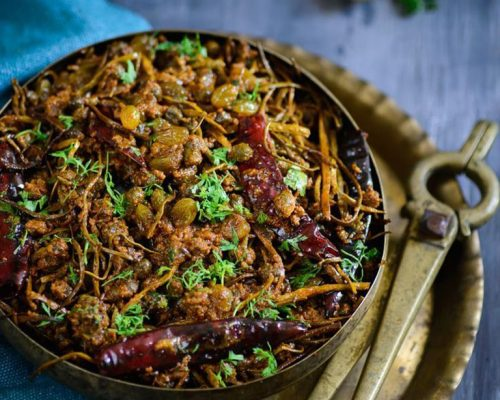
Another essential dish is ker sangri. Many visitors wonder what it is, since its unique ingredients are rarely found outside the state. Sun-dried and then slow-cooked with local spices, it creates a flavour that is earthy, sharp, and truly unique to this region.
You may also come across gatte ki sabzi. This is a gentle curry made with gram-flour dumplings simmered in yoghurt. It perfectly shows how local cooks create amazing flavour without relying on fresh vegetables, which can be scarce.
For guests who enjoy meat, laal maas is the standout choice. This slow-cooked mutton curry uses Mathania chillies, giving it a strong flavour and a deep red colour. Despite its appearance, many versions are less spicy than expected. Local guides and cooks are happy to adjust the heat to suit your taste.
Street Food and Desert Snacks: Everyday Flavours of Jaisalmer
Beyond the grand thalis and iconic feasts, the real heartbeat of Jaisalmer’s food culture lives on the streets. Here, quick and flavour-packed snacks fuel daily life and offer travellers an easy way to taste the city’s spirit.
The star of these street-side favourites is the fateh ki kachori. Picture a flaky, golden pastry stuffed with a warmly spiced moong dal filling, then fried until crisp.It is hearty, satisfying, and perfect for eating on the move.
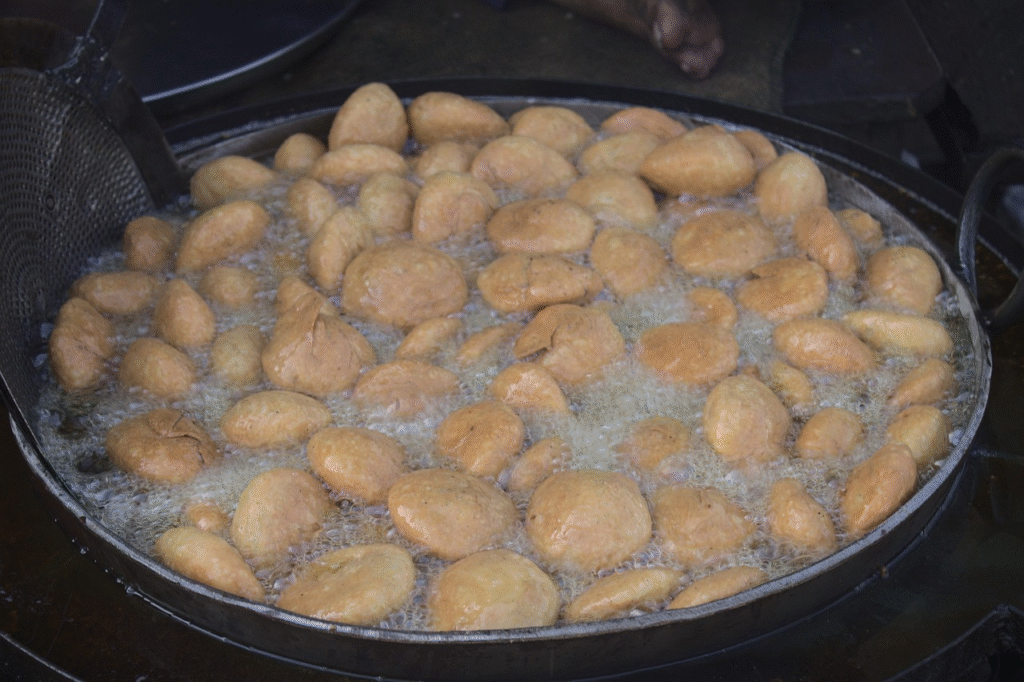
You will also find the beloved mirchi vada. Many visitors worry that it might be too hot, but the chilli used is usually mild. It is filled with tangy mashed potato, coated in gram-flour batter, and fried to create a crunchy, comforting snack with gentle heat rather than strong spice.
As you wander through markets and narrow lanes, you’ll notice vendors selling colourful local nibbles. Bikaneri bhujia is the most famous—thin, savoury strands made from gram flour and spices. You may also spot mixes made with dried desert berries and beans, once carried by travellers and herders. Light, easy to store, and full of earthy flavour, these snacks let you taste the practical, resourceful wisdom shaped by life in the Thar.
Sweets and Desserts from the Thar: From Ghevar to Doodhiya Kheech
No Rajasthani meal is truly complete without something sweet. The deserts of the Thar create desserts that are rich, unique, and steeped in tradition. They often rely on simple, local treasures: milk, ghee, grains, and desert-grown fruits.
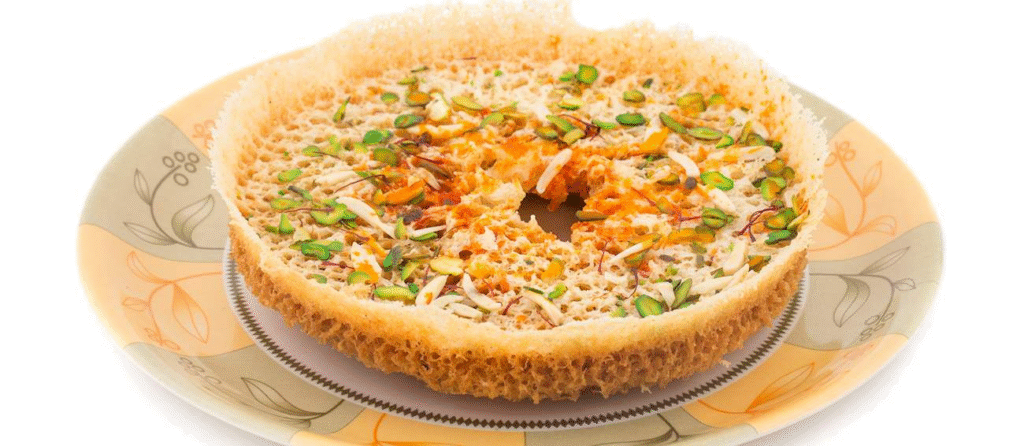
The most spectacular of these is Ghevar. This delicate, honeycomb-shaped cake is a festival essential, especially during Teej. It’s made by dipping a metal mold into a thin, sweet batter and frying it to create a crispy, porous disc. It’s then soaked in saffron syrup and sometimes topped with rabri (thickened milk). The texture—both crunchy and melt-in-your-mouth—is a unforgettable experience.
Then there is Doodhiya Kheech. You might wonder what makes this dessert so special. The name comes from the slow, laborious process of “pulling” milk for hours in a massive kadhai (wok) over a low flame. This constant stirring transforms milk, sugar, and rice into a dense, fudge-like delight. A single bite of this warm, creamy sweet reveals why it’s a treasured family recipe passed down through generations.
Beyond these stars, you’ll find many other treats. In Jaisalmer, don’t miss the chance to try Ghotua Ladoo, a gram flour sweet from a famous century-old shop. In winter, the iconic Mawa Kachori—a fried pastry filled with sweetened mawa and nuts—offers a decadent taste of Rajasthani generosity.
These desserts are more than just sugar; they are a celebration of patience, resourcefulness, and the joy of sharing. They provide a perfect, sweet pause in your culinary journey, reflecting the warmth and richness of Rajasthani culture itself.
A Royal Culinary Journey: The Feasts and Rituals of a Marwari Wedding
If Rajasthan’s everyday food is a melody, its Marwari wedding cuisine is a grand symphony. These feasts are where culinary tradition reaches its peak, telling stories of royalty, celebration, and timeless community rituals.
A wedding feast, or Shaadi ka Khana, is a lavish, multi-course affair. It’s a parade of flavours where no expense is spared to honour guests. While you might expect rich meat curries, these feasts are traditionally a breathtaking showcase of vegetarian excellence. This reflects the deeply rooted Marwari culture, proving that plant-based food can be the height of luxury.
The feast begins with a welcome sweet, often Ghevar or Mishri Mawa, setting a tone of generosity. Then, the main spread unfolds. You’ll find iconic dishes like Dal Baati Churma, but here, the baati might be smaller, more delicate, and the dal richer. Ker Sangri makes a celebrated appearance, its unique desert flavours symbolising the resilience of the land and the community.
But the true stars are the elaborate main courses. Think of Panchmel Dal, a harmony of five lentils, or Moranga Bhaat, a fragrant rice dish cooked with buttermilk and spices. Dozens of vegetable preparations, pickles, kadhis, and fried breads fill the plate, each recipe perfected over generations.
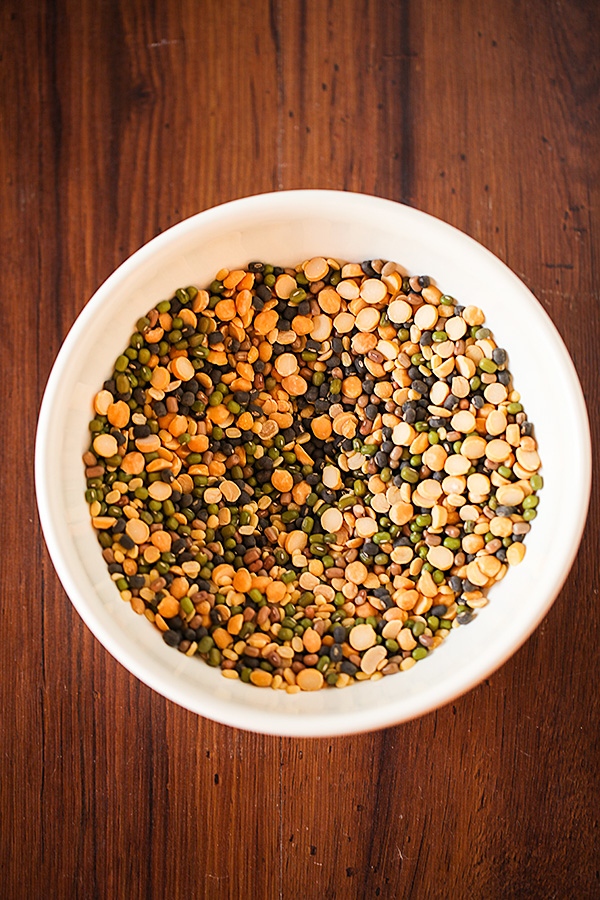
Dining is more than eating; it’s a ritual. Food is served on large platters, often shared by families sitting together. The atmosphere is electric with music, laughter, and blessings. This is where the desert’s warm hospitality shines brightest, turning a meal into an unforgettable memory and a true celebration of life’s most precious moments.
Rumi’s Desert Camp: Experiencing Rajasthan’s Culinary Journey in the Thar Desert
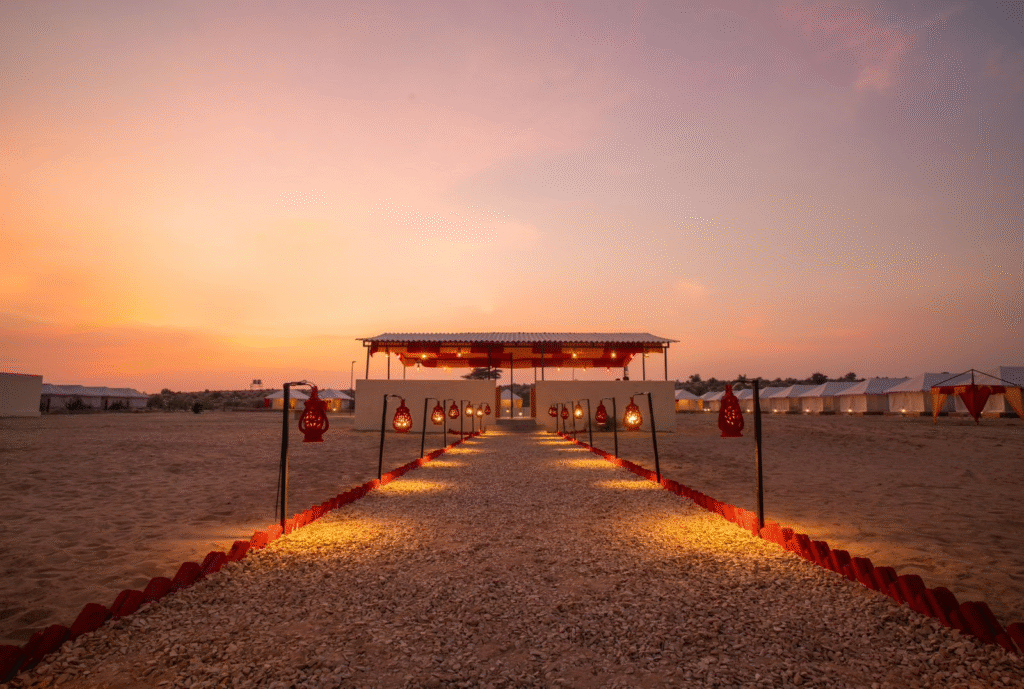
This is where the map ends and the atmosphere shifts. A Rajasthan culinary journey reaches its fullest expression under the open sky of the Thar Desert. At a camp such as Rumi’s, the flavours and traditions you’ve explored throughout your trip become a living, intimate experience rather than a story on a page.
As the sun sinks behind the dunes and the sand turns gold, the evening begins quietly. You are welcomed into a warm setting lit by candles and a crackling fire. The noise of the city disappears. The air is cool, carrying that distinct earthy scent the desert releases after a hot day.
Dining here feels like a small performance shaped by nature. You sit on soft cushions, surrounded by the stillness of the dunes. A local musician plays nearby, sharing songs that speak of journeys, devotion, and celebration. The music is not simply entertainment; it adds depth to the moment and connects you to the land.
The meal reflects everything that makes Rajasthani cooking so compelling. Dishes are slow-cooked, richly spiced, and prepared using age-old methods. Fresh breads are baked over live coals. Curries reveal layers of flavour shaped by desert ingredients and careful technique. Each plate feels both humble and refined.
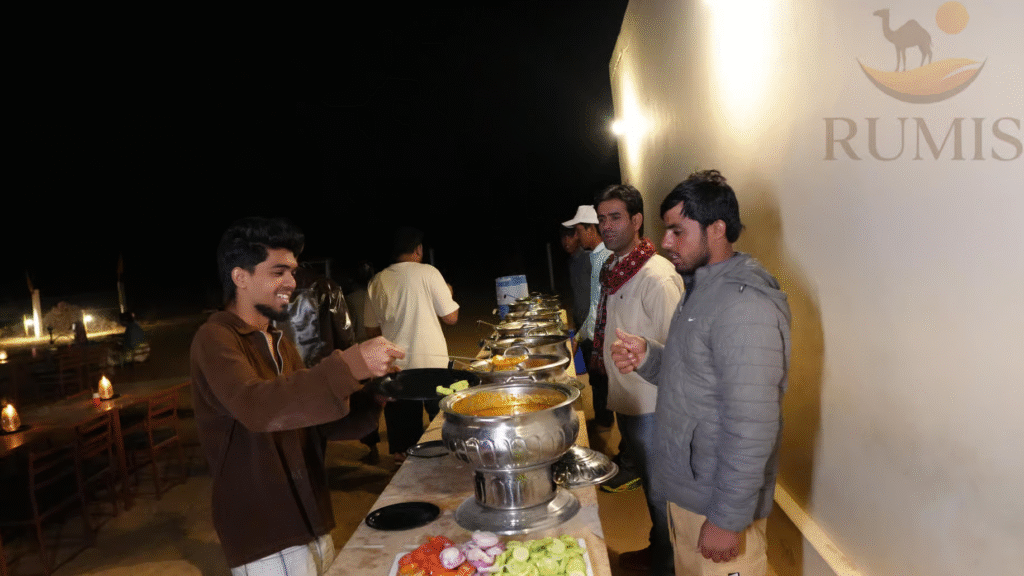
The true luxury of the evening lies in the immersion. You taste dessert while sitting beneath a sky full of stars. You feel the warmth of the fire and the breeze that travels across the dunes. The setting, the music, and the food come together to create a memory that is impossible to forget.
It is the perfect finale to a Rajasthan culinary journey—an experience that captures the culture, the landscape, and the generous spirit of the desert. Create your itinerary with our Team!